.png)

The 10 Countries That Still Tax Wealth: Rates, Rules, and Who Pays
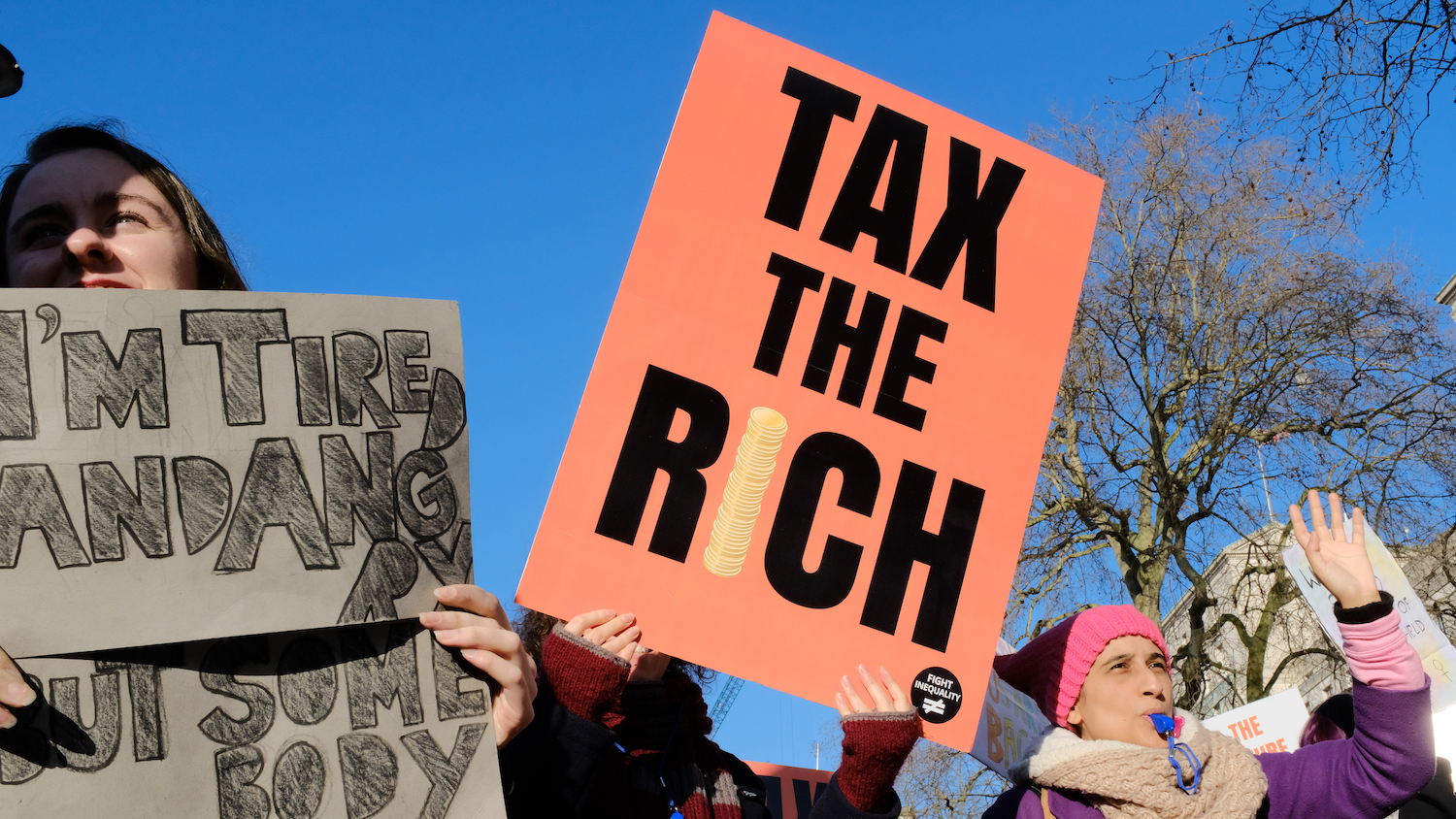
The wealth tax is one of the most debated instruments in global taxation, and one of the least common. Of the 38 member states of the OECD, only four levy a comprehensive net wealth tax on individuals: Norway, Spain, Switzerland, and Colombia. A handful of others, including France, Italy, Belgium, and the Netherlands, tax specific categories of assets rather than total net worth.
For anyone considering international relocation, a second residence, or a citizenship by investment programme, wealth taxes deserve close attention. Unlike income taxes, which apply to what you earn, wealth taxes apply to what you own. That distinction matters enormously for high-net-worth individuals whose wealth is concentrated in assets rather than current income.
Below is a country-by-country breakdown of how each regime works, what the rates actually mean in practice, and the structuring considerations that matter most.
Norway: The Original, and Still Going
Norway has taxed individual wealth continuously since 1892, making it one of the oldest wealth tax regimes in the world. Individuals with net wealth above NOK 1.9 million (approximately $197,000) pay a combined rate of 1%, split between a 0.35% municipal levy and a 0.65% state levy. For net wealth exceeding NOK 21.5 million (approximately $2.2 million), the state rate rises to 0.75%, bringing the combined rate to 1.1%.
The tax applies to worldwide assets for residents, including foreign real estate. However, certain assets receive significant valuation discounts: primary residences are assessed at just 25% of market value (up to NOK 10 million), shares in listed companies at 80%, and foreign residential and holiday properties at 30% of documented market value. The effective rate on actual wealth is therefore considerably lower than the headline figure.
Norway's wealth tax has been a flashpoint for political debate, particularly after the centre-left government raised rates in 2022. Several high-profile Norwegians relocated to Switzerland, a trend that attracted significant media attention. Norway raised approximately NOK 32 billion ($3.3 billion) from its wealth tax in 2023, with a broad base of roughly 655,000 taxpayers.
Structuring Note: For clients with Norwegian exposure, the valuation discounts on primary residences and listed shares are the most significant planning opportunities. Where assets are held through foreign structures, careful treaty analysis is essential to avoid double taxation while claiming available credits.
Spain: Europe's Most Complex Wealth Tax Regime
Spain's wealth tax system operates on two overlapping levels: a regional net wealth tax (Impuesto sobre el Patrimonio) and, since 2022, a national solidarity wealth tax (Impuesto Temporal de Solidaridad de las Grandes Fortunas). The regional wealth tax is progressive, with rates ranging from 0.16% to 3.5% on net assets exceeding €700,000. Residents are taxed on worldwide assets; non-residents pay only on assets located in Spain.
The complication is that Spain's autonomous communities can modify or eliminate the regional wealth tax. Madrid, Andalusia, Cantabria, and Extremadura had previously offered 100% relief. The solidarity tax was designed to close that gap, applying to individuals with net assets exceeding €3 million at rates from 1.7% to 3.5%. Spain's Constitutional Court upheld the tax in December 2023, and the government extended it indefinitely.
Spain collected approximately €3.1 billion from wealth taxes in 2023, about 0.6% of total tax revenue.
Structuring Note: Participants in Spain's Beckham Law (the special impatriate tax regime) benefit from a critical carve-out: their foreign assets are excluded from the wealth tax base, and they are exempt from the solidarity tax on non-Spanish wealth. For HNWIs with substantial overseas holdings, the Beckham Law effectively neutralises Spain's wealth tax for up to six years. This is a key planning consideration for any client relocating to Spain.
Switzerland: Low Rates, Broad Base, Cantonal Variation
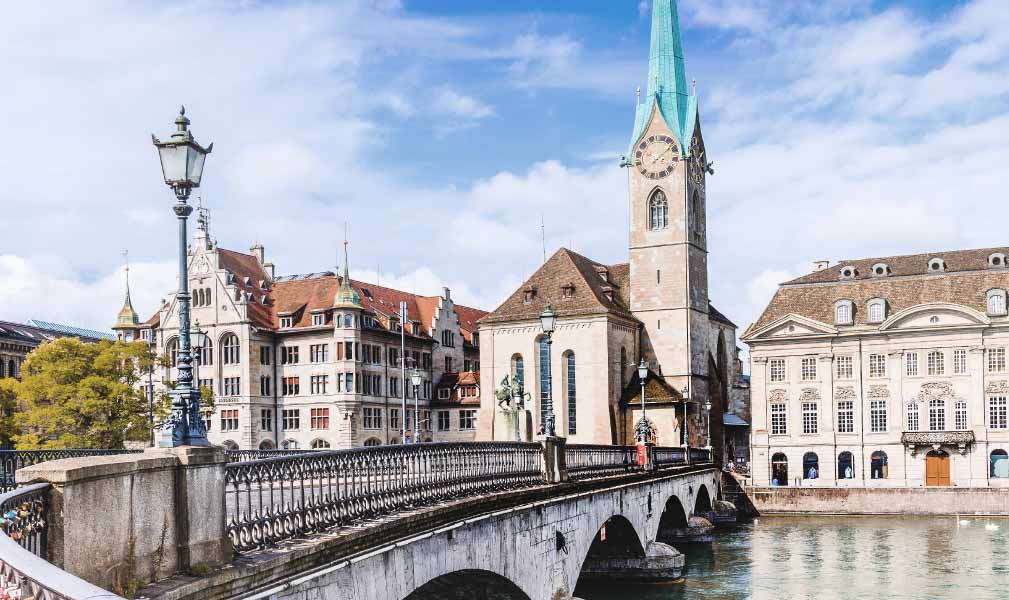
Switzerland's wealth tax is levied at the cantonal and communal level with no federal component. Unusually, it has low exemption thresholds, meaning it reaches well into the upper middle class. In Zurich, the tax begins at CHF 80,000 ($104,000) with a starting rate of 0.05%, rising to approximately 0.3% on wealth above CHF 3.3 million. In Geneva, the top rate can approach 1%.
The tax applies to worldwide assets of Swiss residents, excluding foreign real estate and foreign permanent establishments. Non-residents are taxed only on Swiss-situated assets. The variation between cantons creates significant internal tax competition, with Zug, Schwyz, and Nidwalden attracting wealthy residents through notably lower rates.
Lump-sum taxation (forfaitaire), available to certain foreign nationals not employed in Switzerland, can further reduce the effective burden. The taxable base is typically calculated as 20 times the negotiated income base rather than actual worldwide wealth.
Despite low headline rates, Switzerland's broad base generated approximately €9.5 billion from individual wealth taxes in 2023, representing 4.3% of total tax revenue — the highest share of any OECD country.
Colombia: Latin America's Most Aggressive Wealth Tax
Colombia's wealth tax underwent a dramatic escalation at the end of 2025. After Congress struck down a proposed tax reform bill, President Gustavo Petro's government declared an economic emergency and issued Legislative Decree 1474, which took effect on 1 January 2026. The decree slashed the wealth tax threshold from 72,000 UVT to 40,000 UVT (approximately $530,000), significantly expanding the taxpayer base to an estimated 102,000 individuals.
The rate structure is progressive, starting at 0.5% and rising to a top marginal rate of 5% for net assets exceeding two million UVT (approximately $28 million). That 5% top rate is, by a wide margin, the highest statutory wealth tax rate in any major economy. Residents are taxed on worldwide assets; non-residents pay only on Colombian assets.
The decree's legal future is uncertain, as it was issued under emergency powers and must be reviewed by the Constitutional Court. Colombia's stop-start approach to wealth taxation — temporary levies during COVID-19, a permanent version in 2022, and now this escalation by executive decree — creates genuine planning challenges and the kind of policy uncertainty that drives capital elsewhere.
Argentina: Phasing Down
Argentina's wealth tax, the Impuesto sobre los Bienes Personales (Personal Assets Tax), applies to resident individuals on worldwide net assets and to non-residents on Argentine-situated assets. Under President Javier Milei's 2024 reform package, the tax is being significantly reduced. Rates for 2025 range from 0.5% to 1.1%, down from a top rate of 1.5% in 2023. By 2027, the only rate will be 0.25%.
The administration also introduced a voluntary prepayment scheme (REIBP) allowing taxpayers to pay a reduced rate of 0.75% on their 2023 asset base to cover the entire 2023–2027 period. Argentina represents the clearest current example of a country actively dismantling its wealth tax, consistent with the administration's libertarian economic agenda. Whether the trajectory survives future administrations remains an open question.
France: Real Estate Only, Since 2018
France abolished its broad-based wealth tax (ISF) in 2018, replacing it with the Impôt sur la Fortune Immobilière (IFI), which applies exclusively to real estate assets. The IFI applies when the net taxable value of a taxpayer's real estate holdings exceeds €1.3 million, with progressive rates from 0.5% to 1.5% on portions above €10 million.
The shift from ISF to IFI exempted financial assets, yachts, and other movable wealth from the tax base. France collected approximately €2.3 billion from the IFI in 2023, just 0.2% of total tax revenue.
Structuring Note: For investors, the IFI means that financial assets — including investments qualifying under CBI programmes — are not subject to French wealth tax. However, real estate purchases in France carry a meaningful annual cost beyond the purchase price that must be factored into any acquisition analysis.
Italy: Two Taxes on Foreign Assets
Italy does not levy a general net wealth tax, but it imposes two specific taxes on foreign-held assets owned by Italian tax residents. The IVIE applies to foreign real estate at 1.06% (increased from 0.76% in 2024). The IVAFE applies to foreign financial assets at 0.2%, rising to 0.4% for assets held in jurisdictions that Italy classifies as having preferential tax regimes.
The practical effect is an asymmetry: Italian residents who hold their assets domestically face no wealth tax, while those with assets abroad face IVIE and IVAFE on top of income taxes. The design is explicitly intended to discourage offshore asset-holding, though it applies equally to foreign nationals who become Italian tax residents.
Structuring Note: Italy's flat-tax regime for new residents (€300,000 per year for those relocating from 2026; €200,000 under the 2024 grandfathered rules) explicitly exempts participants from both IVIE and IVAFE. Flat-tax residents also face no foreign asset reporting obligations, no Italian gift or inheritance tax on overseas assets, and no restrictions on remitting funds. The 7% retiree flat tax for those moving to small southern Italian towns carries the same exemptions.
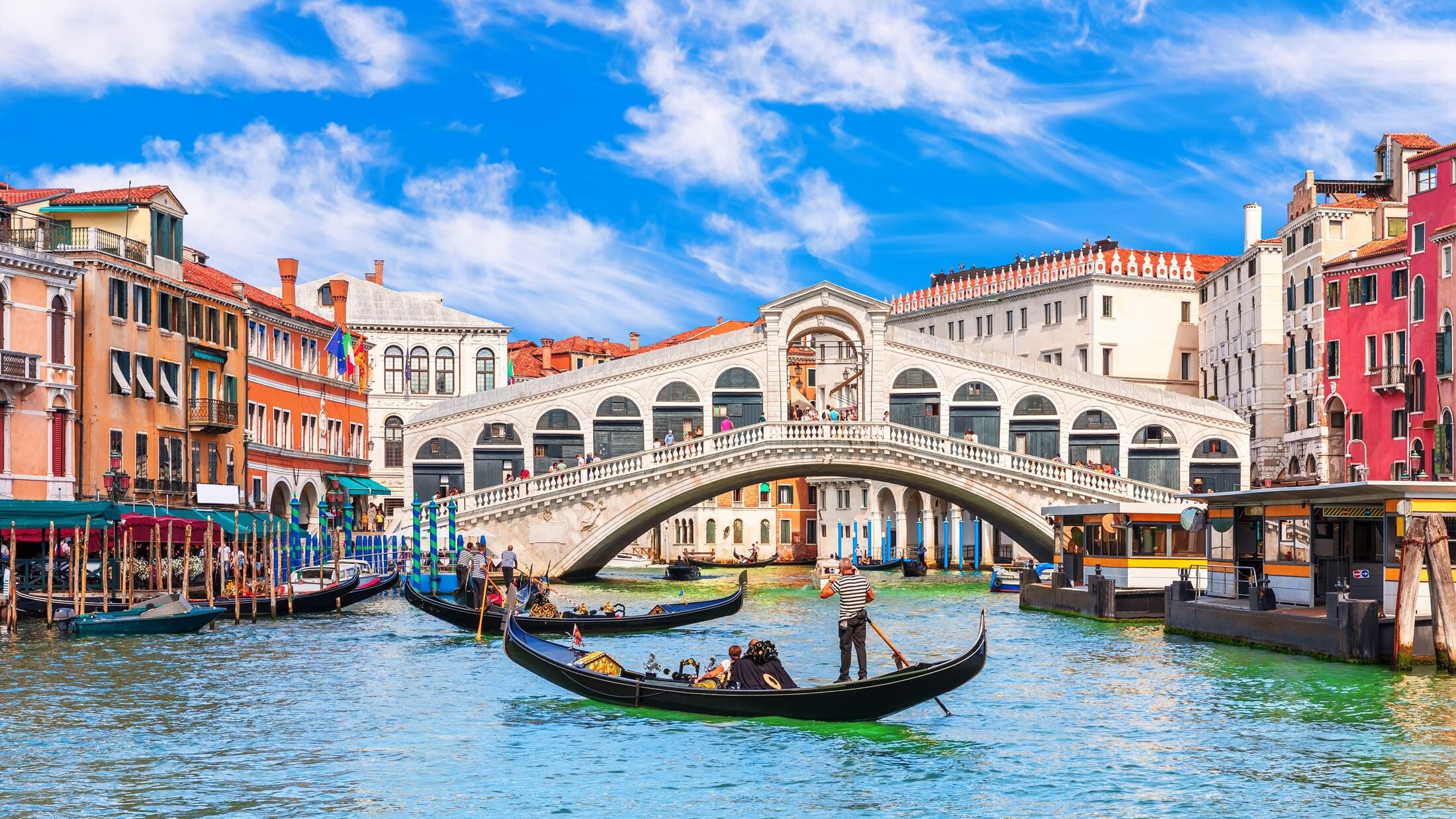
For clients considering Italian residency, these exemptions are among the regime's most significant benefits.
Belgium: The Securities Account Tax
Belgium has no general wealth tax, but since 2021 it has levied an annual tax of 0.15% on securities accounts exceeding €1 million. The tax applies to the total account value once the threshold is crossed, not merely to the excess. A cap mechanism ensures the tax does not exceed 10% of the difference between the account value and the €1 million threshold.
Both resident and certain non-resident account holders with Belgian securities accounts are subject to the tax. The narrow scope means it affects relatively few taxpayers, but for those it reaches, it adds a meaningful annual cost to holding a large investment portfolio through Belgian institutions.
The Netherlands: Box 3 and a Generational Reform
The Netherlands does not technically have a wealth tax, but its Box 3 income tax regime functions as one. Under the current system, the Dutch tax authorities assume fictional rates of return on three categories of assets and tax the blended result at a flat 36%. For 2025, the deemed return on bank deposits is 1.44%; on investments and other assets, 5.88%; and on debts, 2.62%.
An investor holding €500,000 in equities above the threshold would face a deemed return of roughly €29,400 under the 2025 rates, producing a tax bill of approximately €10,600 — regardless of whether the portfolio actually gained or lost value.
The system has been in legal turmoil since a 2021 Dutch Supreme Court ruling found it violated the European Convention on Human Rights. The Dutch parliament approved the Box 3 Actual Return Act in early 2026, set to take effect in 2028, which will apply the 36% rate to actual returns including unrealised gains. Until then, the current deemed-return system remains in force.
Uruguay: Domestic Assets Only
Uruguay levies a net wealth tax (Impuesto al Patrimonio) on assets located within its territory at a flat rate of 0.1% for resident individuals. Non-residents face a progressive scale with higher rates. The non-taxable minimum is approximately $120,000 for individuals and $240,000 for family groups.
Crucially, Uruguay's territorial tax system means foreign-held assets are excluded. A resident whose wealth consists primarily of overseas investments pays no wealth tax on those holdings. Combined with an 11-year tax holiday on foreign income for new residents, Uruguay has become one of the most tax-efficient residences in Latin America, attracting growing interest from investors and relocating HNWIs, particularly from Argentina and Brazil.
Why Most Countries Abandoned Wealth Taxes
The shrinking list of countries with wealth taxes is itself part of the story. In 1990, 12 OECD countries levied a net wealth tax. Today, the number is four. Austria, Denmark, Finland, Germany, Iceland, Sweden, and others repealed their wealth taxes between the mid-1990s and 2007.
The reasons were remarkably consistent: administrative complexity, capital flight, revenue that fell short of expectations, and difficulty valuing illiquid assets like private businesses and art collections. Sweden repealed its wealth tax in 2007 after concluding that the revenue generated did not justify the capital outflow it provoked.
The pattern holds a clear lesson. Wealth taxes that apply to a broad base at low rates (Switzerland) tend to persist. Those that impose high rates on a narrow base (pre-2007 Sweden, pre-2018 France) tend to be repealed. Understanding this dynamic is essential for long-term tax planning.
Disclaimer: This article is for informational purposes and does not constitute tax advice. Tax rules change frequently, and individual circumstances vary. Consult a qualified tax professional before making decisions based on the information above. Rates and thresholds are current as of early 2026 but should be verified against the latest official sources.
© 2026 HPT Group LLC. All rights reserved.